
Morning opening: Ireland takes presidency of the EU

Jakub Krupa
Ireland is set to take over the rotating presidency of the European Union today at a ceremony at Dublin Castle attended by some of the EU’s top figures – and Ukraine’s Volodymyr Zelenskyy.

An opening ceremony will take place 2pm local time, followed by a press conference. I will bring you all the key lines here.
It has been 13 years since its last chaired the works of the bloc, and the to do list is only longer this time round.
EU member states will be looking at Ireland to help navigate political talks on new sanctions against Russia and support for Ukraine, as well as tricky accession talks with Moldova, Ukraine and other candidates.
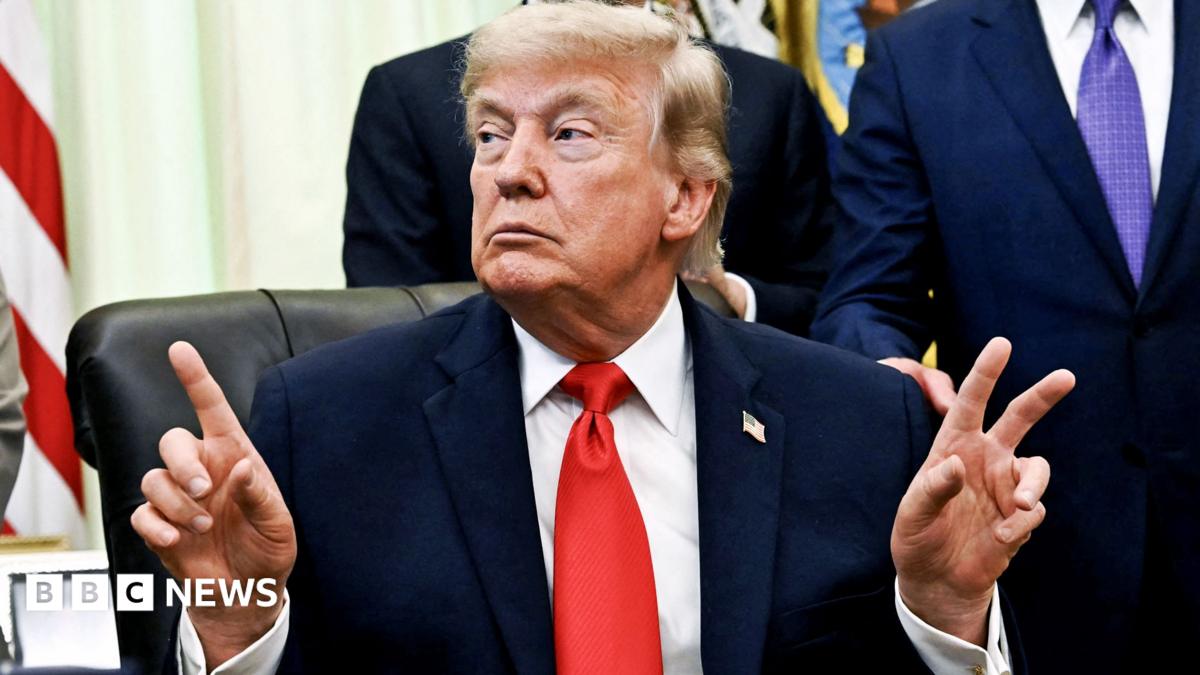
But critics also ask some tough questions on Ireland’s credibility to lead the bloc’s work on digital given so many of US Big Tech companies – so fiercely defended by Donald Trump – are headquartered in the country.
Elsewhere, Nato’s Mark Rutte will be in Berlin today, as he tours EU capitals ahead of next week’s Nato summit in Ankara.
I will bring you all the latest.
It’s Wednesday, 1 July 2026, it’s Jakub Krupa here, and this is Europe Live.
Good morning.
Key events
The presser ends with a couple of questions on the strait of Hormuz and Germany’s plans to contribute to allied minesweeping operations there, with Merz and Pistorius both saying essentially they need a working ceasefire first, and that’s it.
Rutte, Merz insist US is committed to supporting Ukraine
Rutte gets a tricky question about the US commitment to helping Ukraine, but he stays on message.
He says “when it comes to the defence of Ukraine, the US is still indispensable,” as he points to the flow of US armaments into Ukraine, paid for by Canadians and Europeans.
Merz jumps in to highlight the conclusions adopted at the recent G7 summit, with clear support for Ukraine.
“The US president was with us, he signed the document, and so this is the clear position of those who are in G7, and that is something we can rely on when we have this meeting next week,” he says.
Merz gets asked about Germany’s preparation for Nato summit next week.
He repeats Pistorius’s favourite line that “Nato needs to become more European in order to remain transatlantic.”
He says Nato is changing not purely under pressure from Trump, but “in our own interest.”
Riiiiight.
There are also some questions about domestic issues and the government’s reform agenda, but Merz says he will brief the press on that tomorrow.
Merz and Pistorius get asked about reported deals with the US to produce US weapons under licence in Germany, and whether that contradicts the message of making Nato more European.
They say that’s not the case, and it’s part of that transition, as Europeans do not have certain systems – “not yet” – and so they can help with the US capacity in the meantime.
“We want to become more independent, but we don’t want to do without closer cooperation with the US,” Pistorius say.
‘We must keep up pressure on Russia,’ Rutte tells Germany ahead of Nato summit
Nato’s Rutte begins with lavish praise for Germany, as he says “Germany leads and Germany delivers.”
He says Germany is “on track to invest 3.5% in GDP in defence by 2029,” which he says is “an extraordinary achievement.”
“Increasing defence investments means making tough decisions, but it is the right thing to do when we face a more dangerous world,” he says.
He also hails Germany as “an industrial powerhouse with major defence companies and world-class research institutions.”
“Nato’s message to industry across the alliance is clear: be ready, speed up, work together, open new production lines, expand supply chains, and deliver quickly what we need to our security. Deterrence is built in factories as much as is projected by our armed forces.”
He also praises Germany’s new deployments, including in Estonia, Lavia, Lithuania.
He says Berlin is “a leader on Ukraine,” as he adds:
“We agree we must keep up the pressure on Russia, even when its war against Ukraine ends, Russia will remain a long-term threat to Euro-Atlantic security.”
Pistorius talks about changes in the German military reserve system, with “the Bundeswehr building up.”
He talks about reforms needed to allow to mobilise reservists better and more efficiently.
“Mark, we’re doing all we can to strengthen our operational readines as the biggest Nato partner in Europe, all this in the spirit of national and collective defence,” he tells Rutte.
Merz says Germany is “speeding up” our work on improving its defence preparedness, as “this is necessary in a situation where we, as Europeans, need to quickly and resolutely show responsibility for our freedom and security and prosperity.”
Defence minister Pistorius steps up next, talking about “a lot of work [done] over the past few years,” improving Germany’s readiness to respond to any potential problems.
‘Up to Putin to engage’ with talks to end war in Ukraine, Merz says as he welcomes Nato’s Rutte
Merz opens the press conference, welcoming Rutte to Berlin.
He says the meeting comes just a week before the Nato summit in Ankara, with all countries “engaged in intensive preparations.”
He says he will also host his Baltic counterparts later this week to “send out a message of unity and strength.”
Merz says Europeans want to “give Nato a more European dimension,” and “reduce unilateral transatlantic dependency.”
He points out Germany’s move to step up its defence spending under this government, and talks about Berlin’s continuing support for Ukraine.
“We will not waver in our support for Ukraine, and we hope to see Russia willing to engage in negotiations soon,” he says, hinting at new financial pledges to support Ukraine at the summit next week.
“It is now up to Putin to engage in these talks and end the war,” he adds.
Jakub Krupa
I am keeping an eye on that Rutte/Merz press conference (10:58) and will bring you the key lines as soon as they show up.
Call to suspend new EU border system in peak holiday period as planes leave half full

Mark Sweney
Meanwhile, airlines and airports have called for the new EU biometric border check system to be suspended during the peak summer holiday period, saying some flights are leaving half full and passengers are struggling in queues of up to five hours.
In a letter to Ursula von der Leyen, the president of the European Commission, airlines and airports asked for an option to suspend checks under the system over fears the situation will get much worse during the busy summer season.
“We have reached a critical point,” said the industry groups ACI Europe, which represents airports, Airlines 4 Europe and the International Air Transport Association, which represents airlines. “Passengers have already been forced to queue for extended periods outside terminal buildings and on exposed aprons because border control facilities cannot process arrivals quickly enough.
“Airlines face half-empty planes at gate closing time, while passengers are stuck in border control queues.”
Some planes have had to delay takeoff while waiting for passengers, with the groups saying that queues are reaching up to five hours at peak times, while others have had to leave passengers behind.
The groups called on the commission to allow airports to “completely suspend” checks “whenever passenger volumes exceed the operational capacity of border control facilities” during July and August.
Ireland’s foreign minister Helen McEntee has been speaking to the country’s national broadcaster, RTÉ.
She said the EU presidency would give Ireland “significant access” on key areas of the EU’s policymaking, allowing it to make the best use of its experienced diplomats.
It’s the eighth time Ireland will host the EU presidency.
She also said she was looking forward to meeting Ukraine’s Volodymyr Zelenskyy later today, and that Ireland would offer support to Ukraine in “whatever way possible,” RTÉ reported.
Nato’s Rutte visits Berlin for talks with Merz, Pistorius
Even before the Dublin event gets under way, we should hear from Nato’s secretary general Mark Rutte who is in Berlin today, where he is attending a cabinet meeting and meeting with Germany’s chancellor Friedrich Merz and defence minister Boris Pistorius.
The trio have a press conference scheduled in about an hour from now.
I will bring you all the key lines here.
Ukraine’s Zelenskyy is expected to land in Dublin shortly before the formal ceremony this afternoon, and will meet with top Irish officials for bilateral talks afterwards.
For Ireland, supporting Ukraine would be “an important priority for us during our term”, PM Martin said in a statement quoted by the Irish Times, adding that the leaders would also discuss how to increase pressure on Russia.
Ukraine could join EU during war with Russia, but it will be ‘merit-based’ process, Irish PM says
Ireland’s prime minister Micheál Martin suggested Ukraine could join the EU even during the war with Russia.
Speaking on RTÉ’s Morning Ireland, Martin said the process will be conducted on “a merit-based approach,” and insisted the EU “wants the war to end,” but the accession could still happen during the conflict.
Ukraine’s Volodymyr Zelenskyy is expected in Dublin today as part of the presidency ceremony.
He also told RTÉ that Ireland wants to reach a political agreement on the next EU budget “by the end of the year,” but he acknowledged it would be “a mammoth task.”
But he said the budget will not include more spending on defence than agriculture.
“Some [member states] who want to spend more, some who want to spend less, quite a significant number who want to protect the common agricultural policy, cohesion funding, and then new areas like competitiveness funding and research, additional money for research funding, which actually is the key to new products and new ideas of the future.”
Morning opening: Ireland takes presidency of the EU
Jakub Krupa
Ireland is set to take over the rotating presidency of the European Union today at a ceremony at Dublin Castle attended by some of the EU’s top figures – and Ukraine’s Volodymyr Zelenskyy.
An opening ceremony will take place 2pm local time, followed by a press conference. I will bring you all the key lines here.
It has been 13 years since its last chaired the works of the bloc, and the to do list is only longer this time round.
EU member states will be looking at Ireland to help navigate political talks on new sanctions against Russia and support for Ukraine, as well as tricky accession talks with Moldova, Ukraine and other candidates.
But critics also ask some tough questions on Ireland’s credibility to lead the bloc’s work on digital given so many of US Big Tech companies – so fiercely defended by Donald Trump – are headquartered in the country.
Elsewhere, Nato’s Mark Rutte will be in Berlin today, as he tours EU capitals ahead of next week’s Nato summit in Ankara.
I will bring you all the latest.
It’s Wednesday, 1 July 2026, it’s Jakub Krupa here, and this is Europe Live.
Good morning.